
Real Estate – hamster kombat daily combo

REITs vs. Direct Property: Which is the Better Real Estate Investment?
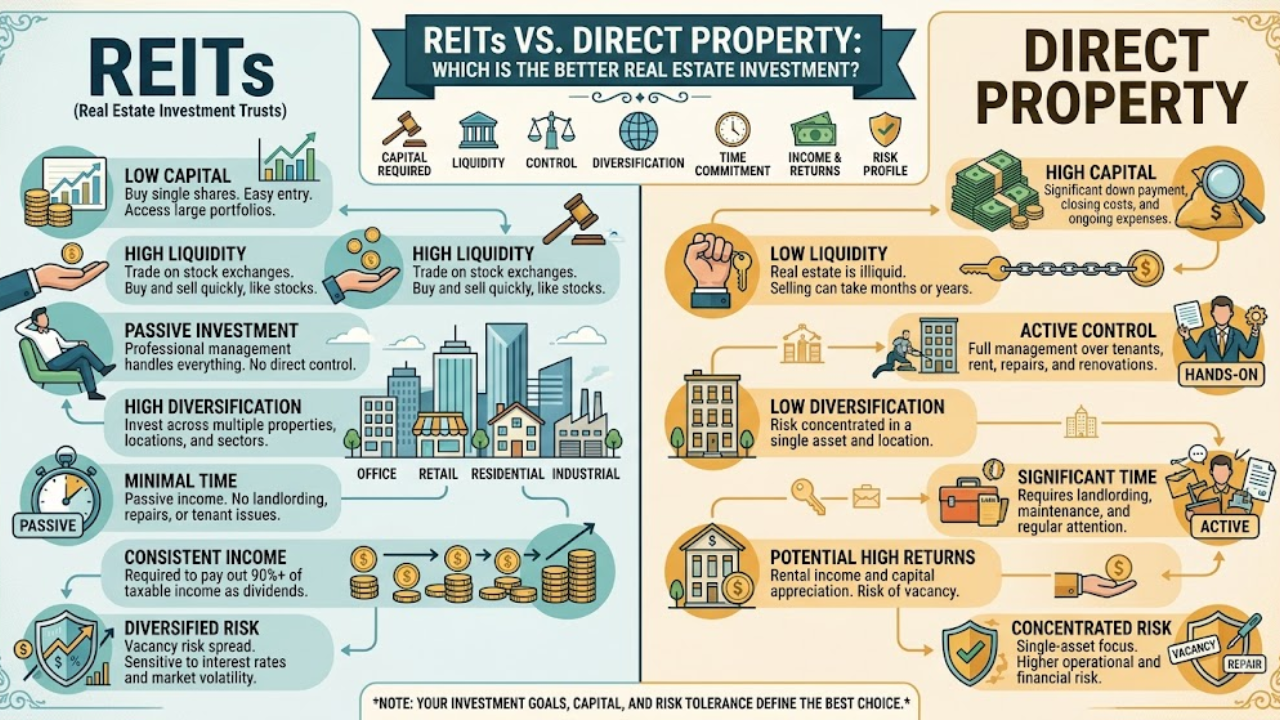
Real estate has long been a cornerstone of wealth creation, offering a proven hedge against inflation and a reliable source of cash flow. However, the way you choose to invest in real estate drastically changes your financial commitments, risk exposure, and daily responsibilities. Today, investors face a primary crossroads: buying physical properties directly or investing in Real Estate Investment Trusts (REITs). While direct property offers tangible ownership and unique tax advantages, it requires significant capital and hands-on management. Conversely, REITs offer stock-market liquidity and passive income but strip away your control over the underlying assets. Here is a comprehensive breakdown to help you decide which investment vehicle is right for your portfolio. Quick Reference: REITs vs. Direct Property To determine the best fit for your financial goals, you must evaluate how much time, money, and control you are willing to commit. Investment Metric REITs (Real Estate Investment Trusts) Direct Property (Physical Real Estate) Capital Required Low: You can buy single shares for a fraction of the cost of a property. High: Requires a substantial down payment, closing costs, and a maintenance reserve. Liquidity High: Traded on public stock exchanges; can be bought or sold instantly. Low: Highly illiquid; selling a physical property can take months or even years. Time Commitment Minimal (Passive): Professional management handles all operations and tenant issues. Significant (Active): Requires hands-on management of tenants, repairs, and maintenance. Diversification High: A single REIT holds dozens or hundreds of properties across various sectors. Low: Risk is highly concentrated in a single asset and a specific geographic location. Control None: You have no say in property management, acquisitions, or sales. Complete: You have full authority over renovations, tenant selection, and rent pricing. 1. The Case for REITs (Real Estate Investment Trusts) A REIT is a company that owns, operates, or finances income-generating real estate. By purchasing shares of a REIT, you pool your money with other investors to earn dividends from real estate investments without having to buy, manage, or finance any properties yourself. The Advantages of REITs Highly Accessible: You do not need a mortgage or hundreds of thousands of dollars to start. You can invest in a REIT through a standard brokerage account. Consistent Passive Income: By law, REITs are required to distribute the vast majority of their taxable income (typically 90% or more) to shareholders in the form of dividends. Instant Diversification: You can easily invest in specialized sectors that are normally out of reach for individual investors, such as commercial skyscrapers, data centers, or healthcare facilities. The Drawbacks of REITs Market Volatility: Because public REITs trade on stock exchanges, their share prices are subject to daily market fluctuations and broader economic sentiment, regardless of the underlying property values. Tax Inefficiency: Unlike qualified dividends from standard stocks, REIT dividends are generally taxed as ordinary income, which can trigger a higher tax burden for top earners. 2. The Case for Direct Property Investment Direct property investing means you are purchasing a physical asset—like a single-family rental, a duplex, or a commercial storefront. You are the landlord, and you are directly responsible for the asset’s performance. The Advantages of Direct Property Powerful Leverage: You can purchase a highly valuable asset using a relatively small amount of your own money (the down payment) while a bank finances the rest. Your returns are based on the total asset value, not just your initial cash investment. Massive Tax Shields: Physical real estate offers unparalleled tax benefits. You can deduct operating expenses, mortgage interest, and utilize depreciation to significantly lower your taxable rental income. You can also use 1031 exchanges to defer capital gains taxes indefinitely. Forced Appreciation: Unlike a REIT, you can actively increase the value of a physical property through strategic renovations, better management, or increasing the rent. The Drawbacks of Direct Property The “Toilet and Tenant” Factor: Direct real estate is not truly passive. Dealing with late rent payments, plumbing emergencies, and property vacancies requires time, energy, and stress. High Barrier to Entry: Acquiring physical real estate requires excellent credit, a large cash down payment, and a solid financial cushion to handle unexpected repairs. Conclusion: Which Should You Choose? There is no universally “better” option—only the option that best fits your current financial reality. If you want truly passive income, have limited starting capital, and prioritize liquidity, REITs are the clear winner. However, if you have substantial capital to deploy, want to maximize tax advantages, and are willing to take on the active responsibilities of a landlord to build generational wealth, Direct Property is the superior vehicle. Many well-diversified investors ultimately choose to hold a combination of both. Disclaimer: This article is for informational purposes only and does not constitute professional financial or investment advice. Real estate markets carry inherent risks. Always consult with a certified financial planner or real estate professional before making major investment decisions.
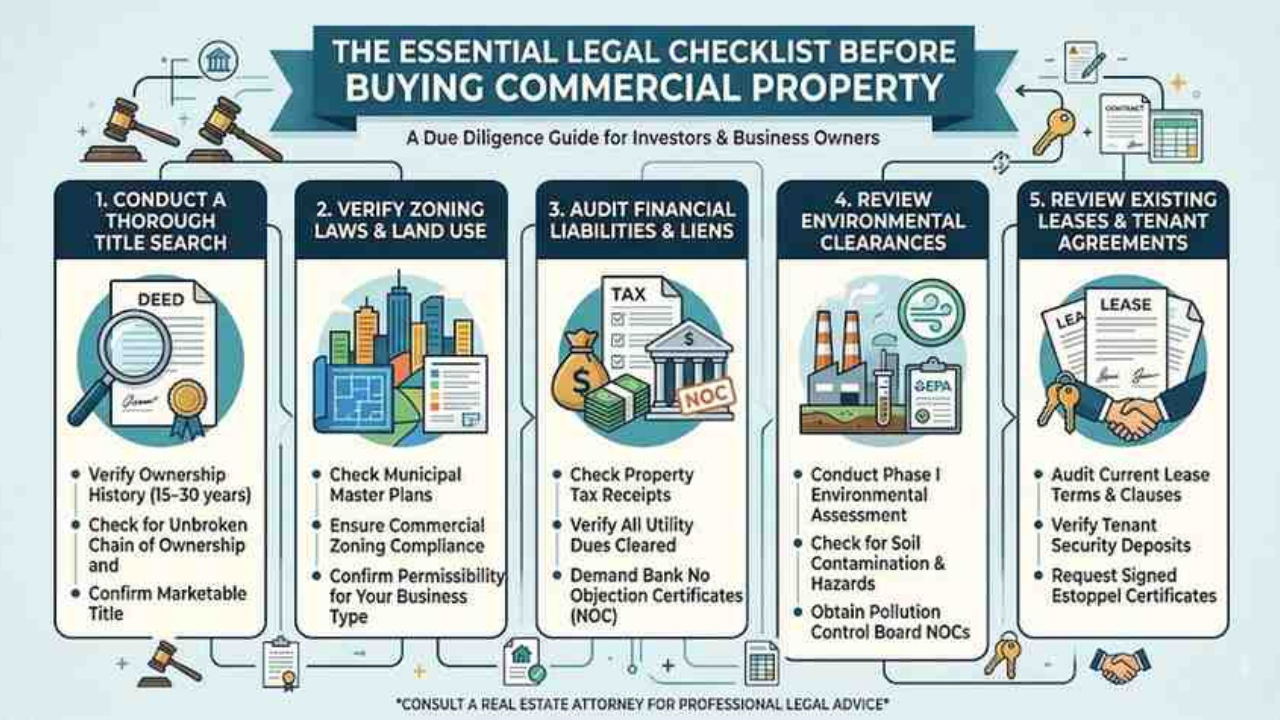
The Essential Legal Checklist Before Buying Commercial Property

Investing in commercial real estate is one of the most profitable financial moves you can make, but it also carries significant risk. Unlike residential real estate, commercial property transactions involve complex legalities, zoning laws, and massive financial commitments. Skipping proper legal due diligence can result in expensive lawsuits, voided contracts, or buying a property you cannot legally use for your business. To protect your investment, you need a bulletproof legal strategy. This essential legal checklist covers everything you must verify before closing the deal on a commercial property. Quick Reference: Commercial Property Legal Checklist Verification Category Key Documents to Check Why It Matters Title & Ownership Sale Deed, Mother Deed, Encumbrance Certificate Ensures the seller has the absolute legal right to sell the property. Zoning & Land Use Municipal Master Plan, Zoning Clearances Confirms your specific business type is legally allowed on the premises. Financial Liabilities Property Tax Receipts, Bank NOCs Protects you from assuming the previous owner’s debts and unpaid taxes. Environmental Laws EPA Clearances, Pollution Control Board NOC Prevents hefty fines for pre-existing environmental hazards on the land. Existing Leases Tenant Agreements, Estoppel Certificates Clarifies your legal obligations to current tenants occupying the building. 1. Conduct a Thorough Title Search The most critical step in buying commercial property is verifying the title. A clear and marketable title guarantees that the seller actually owns the property and has the legal authority to transfer ownership to you. Trace the Ownership History: Your real estate attorney should trace the property’s title back at least 15 to 30 years to ensure an unbroken chain of ownership. Verify the Mother Deed: This is the foundational document of the property. Ensure it is registered and readily available. Check for Joint Ownership: If the property has multiple owners, all parties must legally consent to the sale to prevent future disputes. 2. Verify Zoning Laws and Land Use Permissions Just because a property looks like a retail store doesn’t mean it is legally zoned for one. Zoning laws dictate exactly how a property can be used. Check Municipal Zoning Maps: Ensure the property is strictly zoned for commercial use, not residential or agricultural. Verify Specific Business Permissibility: If you plan to open a restaurant, factory, or medical facility, confirm that the local zoning ordinances allow that specific type of business. Look for Future City Planning Changes: Ensure there are no upcoming highway expansions or municipal projects that could result in eminent domain claims against your property. 3. Check for Encumbrances and Liens An encumbrance is a claim against the property by a party that is not the owner. Buying a property with an active lien means you are also buying the previous owner’s legal troubles. Obtain an Encumbrance Certificate: This legal document will reveal any registered mortgages, liens, or third-party claims against the property. Demand a Bank NOC: If the seller previously took a loan against the property, they must provide a No Objection Certificate (NOC) from the bank proving the debt is fully cleared. 4. Review Environmental Clearances Environmental compliance is a massive factor in commercial real estate. If the land is contaminated, the new owner is often held legally and financially responsible for the cleanup, regardless of who caused it. Conduct an Environmental Site Assessment (ESA): A Phase I ESA will identify any potential environmental hazards like soil contamination or hazardous waste. Check Local Pollution Control Rules: Manufacturing or industrial properties must have up-to-date clearances from local environmental and pollution control boards. 5. Audit Existing Commercial Leases If you are buying a commercial building that already has tenants, you inherit those lease agreements. You cannot arbitrarily kick tenants out or raise the rent without legal backing. Review All Lease Agreements: Check the duration, renewal clauses, and rent escalation terms for every existing tenant. Obtain Tenant Estoppel Certificates: This is a document signed by the tenant confirming the terms of their lease and stating that the landlord owes them no pending obligations. Check Security Deposits: Ensure the seller transfers all tenant security deposits to your accounts at closing. 6. Clear All Pending Taxes and Utility Dues Unpaid property taxes stay attached to the property, not the person. If the seller owes taxes, the government can seize the property even after you buy it. Verify Property Tax Receipts: Demand to see the most recent tax receipts to confirm there are no outstanding municipal dues. Check Utility Bills: Ensure electricity, water, and commercial maintenance bills are cleared up to the date of possession. Conclusion Buying commercial property is a high-stakes financial transaction. A single overlooked document can turn a lucrative investment into a legal nightmare. Always hire an experienced commercial real estate lawyer to perform comprehensive due diligence before signing a purchase agreement. By strictly following this checklist, you can confidently secure your commercial real estate investment. Disclaimer: This article is for informational purposes only and does not constitute professional legal or financial advice. Always consult with a qualified commercial real estate attorney in your local jurisdiction before making property investments.