
Law – hamster kombat daily combo

Essential Legal Documents and Compliance When Starting a New Business
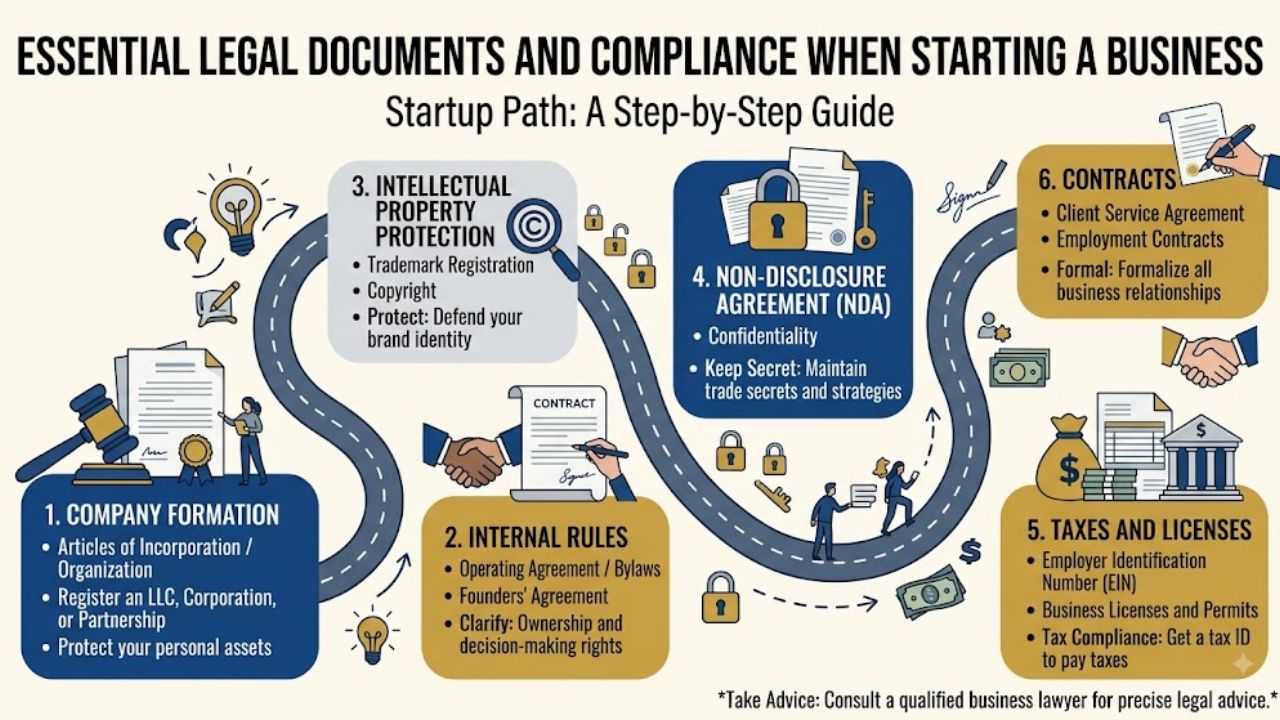
Launching a new business is an exciting venture, but a great idea is not enough to guarantee long-term success. Without a solid legal foundation, your startup is highly vulnerable to co-founder disputes, intellectual property theft, and expensive government fines. Many new entrepreneurs make the critical mistake of treating legal compliance as an afterthought. However, setting up the right legal framework from day one protects your personal assets, builds trust with early investors, and ensures your operations are entirely legitimate. This comprehensive guide breaks down the essential legal documents and compliance steps required when starting a new business. Quick Reference: Core Startup Legal Documents Use this checklist to ensure your business covers all immediate legal bases before launching products or services to the public. Compliance Area Essential Legal Document Primary Purpose High CPC Keywords Business Formation Articles of Incorporation / Organization Legally creates your business entity (LLC or Corporation) with the state. Company registration, LLC formation services Internal Governance Operating Agreement / Bylaws Outlines ownership structures, voting rights, and profit distribution. Startup legal documents, Corporate bylaws Brand Protection Trademark Registration Protects your company name, logo, and slogans from competitors. Intellectual property lawyer, Trademark registration Confidentiality Non-Disclosure Agreement (NDA) Prevents employees and contractors from sharing your trade secrets. Business lawyer, NDA drafting Tax Compliance Employer Identification Number (EIN) A federal tax ID used for filing taxes, hiring employees, and opening bank accounts. Apply for EIN, Business tax compliance 1. Register Your Business Entity Correctly Operating as a Sole Proprietorship is easy, but it exposes your personal assets (like your house and savings) to business liabilities. You must establish a separate legal entity. Choose the Right Structure: Decide between a Limited Liability Company (LLC), an S-Corporation, or a C-Corporation based on your tax preferences and funding goals. File Articles of Organization: Submit these foundational documents to your local government or state authorities to officially register your business name and entity type. Appoint a Registered Agent: Most jurisdictions require you to designate a registered agent—a person or service authorized to receive official legal and tax correspondence on behalf of your business. 2. Draft an Operating Agreement or Founders’ Agreement If you are starting a business with partners, a verbal agreement is a recipe for disaster. You need a legally binding contract that dictates how the business is run. Define Equity and Ownership: Clearly document the percentage of the company each founder owns. Outline Roles and Responsibilities: Specify who handles daily operations, financial decisions, and strategic planning. Create an Exit Strategy: Include a “Buy-Sell” clause that dictates exactly what happens to a founder’s shares if they decide to leave the company, become incapacitated, or pass away. 3. Protect Your Intellectual Property (IP) Your brand identity, proprietary software, and unique processes are often your most valuable assets. You must legally claim them before someone else does. File for Trademarks: Protect your business name, logo, and main product names by registering them with the national patent and trademark office. Sign Invention Assignment Agreements: Ensure that any code, designs, or products created by founders, employees, or contractors are legally owned by the company, not the individual creator. 4. Obtain Necessary Tax IDs, Licenses, and Permits Compliance goes beyond just registering your business name; you must ensure you are legally allowed to operate in your specific industry and location. Get an EIN: Apply for an Employer Identification Number (EIN) from the federal tax authority. This is essential for opening a business bank account and paying taxes. Check Local Zoning Laws: Ensure your business address is zoned correctly for your type of operation, especially if you are opening a physical retail storefront or a manufacturing facility. Apply for Industry-Specific Permits: Depending on your niche, you may need health department permits (for food services), professional licenses (for legal or financial consulting), or specialized sales tax permits. 5. Establish Ironclad Contracts for Employees and Clients Handshake deals offer zero protection in a courtroom. Every business relationship must be defined by clear, written contracts. Client Service Agreements: Draft standard Terms and Conditions (T&Cs) that outline your payment terms, scope of work, and liability limitations to protect against customer disputes. Employment Contracts: Clearly define compensation, benefits, termination conditions, and expectations for all new hires. Implement NDAs: Require contractors, vendors, and employees to sign Non-Disclosure Agreements before exposing them to your sensitive business data or client lists. Conclusion Setting up a business requires much more than just a catchy name and a website. Establishing the proper legal entity, drafting binding internal agreements, securing your intellectual property, and maintaining tax compliance are non-negotiable steps for long-term survival. Because a single legal mistake can bankrupt a startup, it is highly recommended to consult with a qualified business lawyer to draft your foundational documents and ensure absolute compliance in your jurisdiction. Disclaimer: This article is for informational and educational purposes only and does not constitute professional legal advice. Laws and compliance requirements vary significantly by state, country, and industry. Always consult with a licensed business attorney for guidance specific to your startup.
Best Legal Tax-Saving Strategies for High-Income Earners

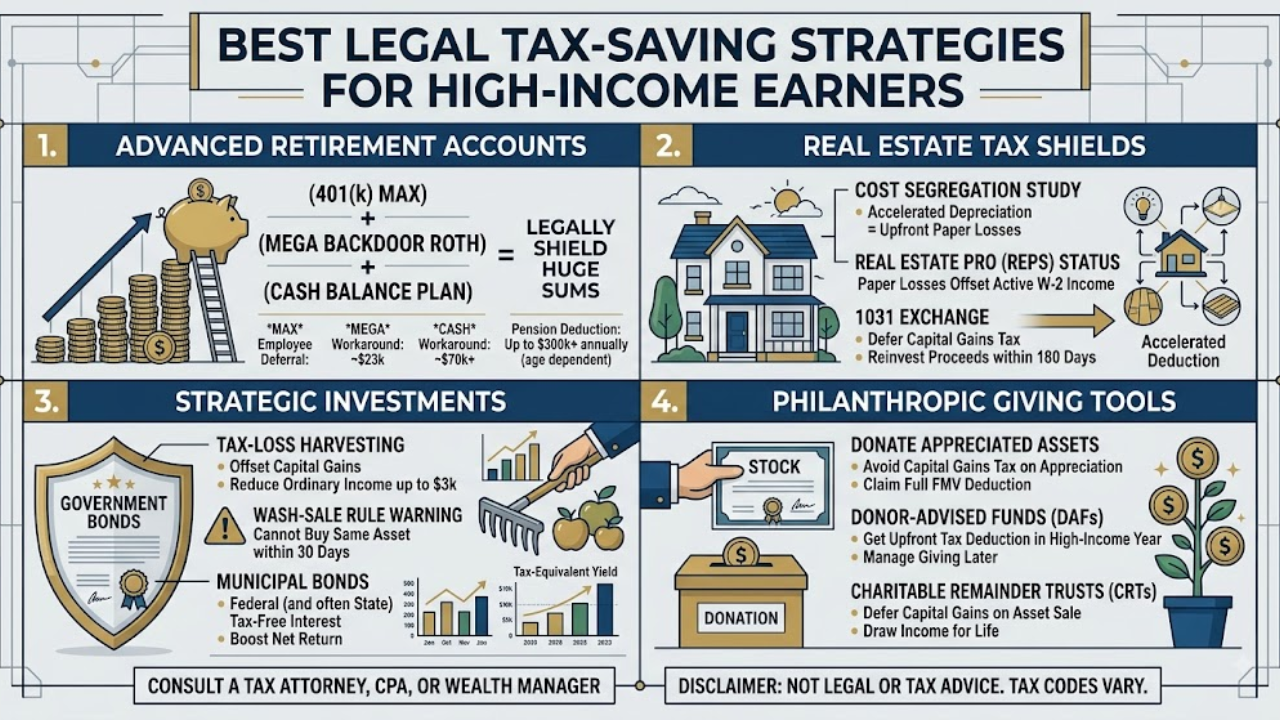
As your income grows, your tax liability increases significantly. For high earners, taxes often represent the single largest annual expense, with top federal, state, and local rates consuming over 40% of total revenue. However, earning a high income does not mean you have to hand over a massive chunk of your hard-earned wealth. The tax code contains built-in incentives designed to reward specific behaviors, such as investing in capital assets, providing retirement security, and supporting charitable causes. By utilizing proactive, legal tax mitigation strategies, high-income individuals can legally protect their assets, maximize capital growth, and keep more money in their portfolios. Quick Reference: Top Tax Reduction Strategies Strategy Primary Benefit Best Suited For High CPC Target Keywords Maxing Tax-Advantaged Accounts Pre-tax deductions and tax-free growth High W-2 Earners & Executives 401k max contribution, Mega Backdoor Roth Real Estate Depreciation & 1031s Defer capital gains & offset active/passive income Real Estate Investors & Business Owners Cost segregation study, 1031 exchange rules Municipal Bond Portfolios Federal (and often state) tax-free interest income High Net Worth Investors Tax-free municipal bonds, Wealth management Donor-Advised Funds (DAFs) Upfront tax deductions for charitable giving High Earners with Peak Income Years Donor advised fund tax benefits, Tax attorney Tax-Loss Harvesting Offsets capital gains and up to $3,000 of ordinary income Active Stock & Crypto Investors Tax loss harvesting software, Capital gains tax strategy 1. Maximize Advanced Retirement Accounts (Beyond Standard 401ks) Standard retirement contributions are a great start, but high earners need to look beyond the basic annual limits to shield larger sums from taxation. Mega Backdoor Roth IRA: If your employer’s 401(k) plan allows after-tax contributions and in-plan Roth conversions, you can contribute significantly more than the standard 401(k) limit each year into a Roth account, enabling tax-free growth forever. Defined Benefit / Cash Balance Plans: For high-earning business owners and self-employed consultants, setting up a Cash Balance Pension Plan allows you to defer up to several hundred thousand dollars annually in pre-tax income, depending on your age. Health Savings Accounts (HSAs): Often overlooked, an HSA offers a “triple tax advantage”—contributions are tax-deductible, growth is tax-free, and withdrawals for qualified medical expenses are 100% tax-free. 2. Leverage Real Estate Tax Shields and Depreciation Real estate remains one of the most powerful wealth-building tools due to its unique, highly favorable tax treatments. Cost Segregation Studies: Commercial and residential property owners can use a cost segregation study to accelerate property depreciation. This allows you to write off property components (like lighting, carpeting, and land improvements) over 5 to 15 years instead of 27.5 or 39 years, generating massive upfront paper losses. Real Estate Professional Status (REPS): If you or your spouse qualify as a Real Estate Professional under tax rules, you can use paper losses from real estate depreciation to directly offset ordinary W-2 or business income. 1031 Exchanges: When selling real estate, defer paying 100% of capital gains taxes by reinvesting the proceeds into another “like-kind” property. 3. Utilize Tax-Loss Harvesting to Offset Gains If you hold a taxable investment portfolio, market volatility presents a valuable tax-saving opportunity. Offset Capital Gains: Tax-loss harvesting involves selling underperforming investments at a loss to balance out capital gains realized from profitable assets. Reduce Ordinary Income: If your total losses exceed your total capital gains in a tax year, you can use up to $3,000 of the remaining losses to offset ordinary income, carrying over any remaining losses into future tax years. Mind the Wash-Sale Rule: To preserve the tax deduction, ensure you do not buy the same asset (or a substantially identical one) within 30 days before or after the sale. 4. Invest in Tax-Exempt Municipal Bonds For investors in the highest tax brackets, income generated from standard savings accounts or corporate bonds can be taxed at steep rates. Federal and State Tax-Free Returns: Interest earned from municipal bonds issued by state and local governments is completely exempt from federal income tax. In-State Exemption: If you buy municipal bonds issued by your home state or local municipality, the interest is usually exempt from state and local income taxes as well. Tax-Equivalent Yield Advantage: Calculate the “tax-equivalent yield” of municipal bonds—often, a lower yield on a tax-free bond delivers a higher net return than a higher yield on a taxable bond for top-tier earners. 5. Implement High-Impact Charitable Giving Tools If you plan to donate to charity, doing so strategically can significantly lower your taxable income while amplifying your philanthropic impact. Donate Appreciated Assets: Instead of donating cash, donate long-term appreciated stock or real estate directly to charity. You get a tax deduction for the full fair market value and avoid paying capital gains tax on the appreciation. Donor-Advised Funds (DAFs): A DAF lets you make a large, tax-deductible charitable contribution in a high-income year and distribute the funds to charities over several years at your own pace. Charitable Remainder Trusts (CRTs): High earners with highly appreciated assets can place those assets into a CRT, receive an immediate tax deduction, draw income from the trust for life, and leave the remaining balance to charity. Conclusion Tax planning is not about evading taxes—it is about structuring your investments and income efficiently within legal guidelines. Because tax laws are intricate and subject to frequent updates, high-income earners should always work with a qualified Tax Attorney, CPA, or Fee-Only Wealth Manager to build a customized, compliant strategy tailored to their financial goals. Disclaimer: This article is strictly for educational and informational purposes and does not constitute legal, tax, or financial advice. Tax codes vary by jurisdiction and personal circumstances. Always consult with a licensed CPA or tax attorney before executing any complex tax strategy.

The Essential Legal Checklist Before Buying Commercial Property

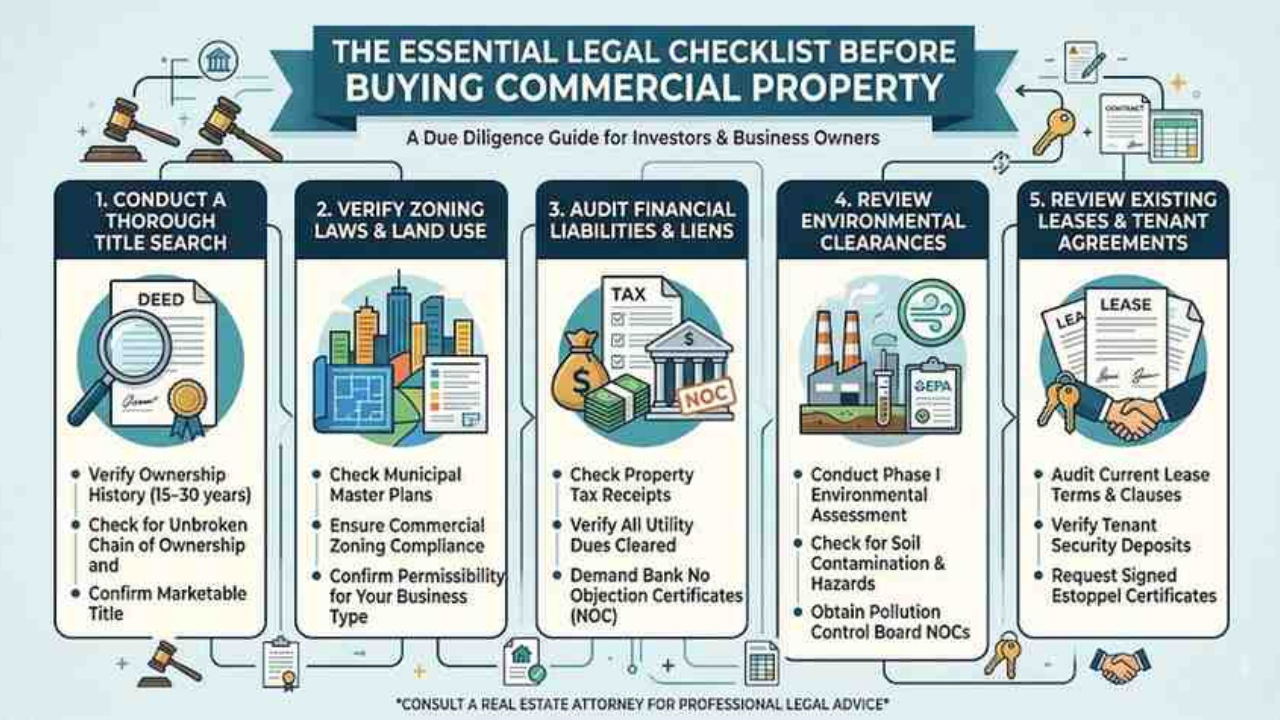
Investing in commercial real estate is one of the most profitable financial moves you can make, but it also carries significant risk. Unlike residential real estate, commercial property transactions involve complex legalities, zoning laws, and massive financial commitments. Skipping proper legal due diligence can result in expensive lawsuits, voided contracts, or buying a property you cannot legally use for your business. To protect your investment, you need a bulletproof legal strategy. This essential legal checklist covers everything you must verify before closing the deal on a commercial property. Quick Reference: Commercial Property Legal Checklist Verification Category Key Documents to Check Why It Matters Title & Ownership Sale Deed, Mother Deed, Encumbrance Certificate Ensures the seller has the absolute legal right to sell the property. Zoning & Land Use Municipal Master Plan, Zoning Clearances Confirms your specific business type is legally allowed on the premises. Financial Liabilities Property Tax Receipts, Bank NOCs Protects you from assuming the previous owner’s debts and unpaid taxes. Environmental Laws EPA Clearances, Pollution Control Board NOC Prevents hefty fines for pre-existing environmental hazards on the land. Existing Leases Tenant Agreements, Estoppel Certificates Clarifies your legal obligations to current tenants occupying the building. 1. Conduct a Thorough Title Search The most critical step in buying commercial property is verifying the title. A clear and marketable title guarantees that the seller actually owns the property and has the legal authority to transfer ownership to you. Trace the Ownership History: Your real estate attorney should trace the property’s title back at least 15 to 30 years to ensure an unbroken chain of ownership. Verify the Mother Deed: This is the foundational document of the property. Ensure it is registered and readily available. Check for Joint Ownership: If the property has multiple owners, all parties must legally consent to the sale to prevent future disputes. 2. Verify Zoning Laws and Land Use Permissions Just because a property looks like a retail store doesn’t mean it is legally zoned for one. Zoning laws dictate exactly how a property can be used. Check Municipal Zoning Maps: Ensure the property is strictly zoned for commercial use, not residential or agricultural. Verify Specific Business Permissibility: If you plan to open a restaurant, factory, or medical facility, confirm that the local zoning ordinances allow that specific type of business. Look for Future City Planning Changes: Ensure there are no upcoming highway expansions or municipal projects that could result in eminent domain claims against your property. 3. Check for Encumbrances and Liens An encumbrance is a claim against the property by a party that is not the owner. Buying a property with an active lien means you are also buying the previous owner’s legal troubles. Obtain an Encumbrance Certificate: This legal document will reveal any registered mortgages, liens, or third-party claims against the property. Demand a Bank NOC: If the seller previously took a loan against the property, they must provide a No Objection Certificate (NOC) from the bank proving the debt is fully cleared. 4. Review Environmental Clearances Environmental compliance is a massive factor in commercial real estate. If the land is contaminated, the new owner is often held legally and financially responsible for the cleanup, regardless of who caused it. Conduct an Environmental Site Assessment (ESA): A Phase I ESA will identify any potential environmental hazards like soil contamination or hazardous waste. Check Local Pollution Control Rules: Manufacturing or industrial properties must have up-to-date clearances from local environmental and pollution control boards. 5. Audit Existing Commercial Leases If you are buying a commercial building that already has tenants, you inherit those lease agreements. You cannot arbitrarily kick tenants out or raise the rent without legal backing. Review All Lease Agreements: Check the duration, renewal clauses, and rent escalation terms for every existing tenant. Obtain Tenant Estoppel Certificates: This is a document signed by the tenant confirming the terms of their lease and stating that the landlord owes them no pending obligations. Check Security Deposits: Ensure the seller transfers all tenant security deposits to your accounts at closing. 6. Clear All Pending Taxes and Utility Dues Unpaid property taxes stay attached to the property, not the person. If the seller owes taxes, the government can seize the property even after you buy it. Verify Property Tax Receipts: Demand to see the most recent tax receipts to confirm there are no outstanding municipal dues. Check Utility Bills: Ensure electricity, water, and commercial maintenance bills are cleared up to the date of possession. Conclusion Buying commercial property is a high-stakes financial transaction. A single overlooked document can turn a lucrative investment into a legal nightmare. Always hire an experienced commercial real estate lawyer to perform comprehensive due diligence before signing a purchase agreement. By strictly following this checklist, you can confidently secure your commercial real estate investment. Disclaimer: This article is for informational purposes only and does not constitute professional legal or financial advice. Always consult with a qualified commercial real estate attorney in your local jurisdiction before making property investments.