
Property – hamster kombat daily combo

Home Loan Refinancing: How to Successfully Lower Your Interest Rate
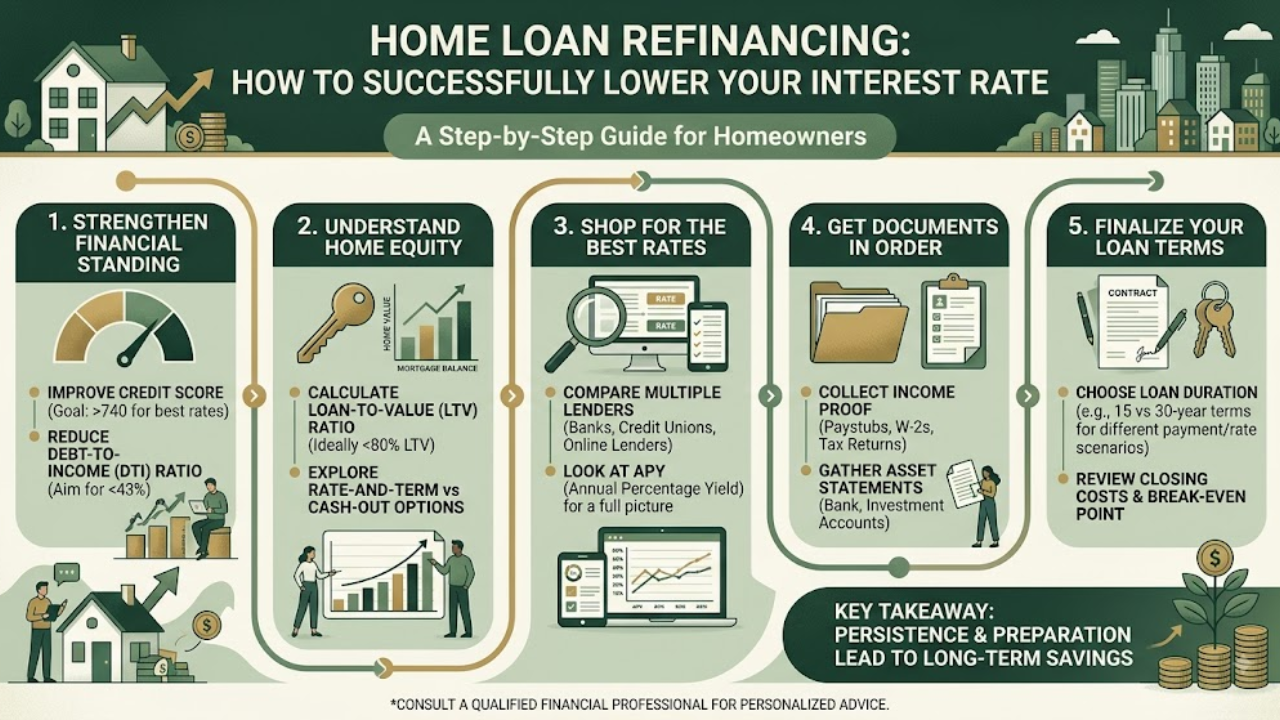
F or most homeowners, a mortgage is the largest financial commitment they will ever make. However, the interest rate you signed up for when you first bought your home doesn’t have to be the rate you keep forever. Home loan refinancing (or mortgage balance transfer) is a strategic financial tool that allows you to replace your existing home loan with a new one—ideally with a lower interest rate and better terms. When executed correctly, refinancing can reduce your monthly EMI (Equated Monthly Installment), help you pay off your home faster, and save you thousands in interest. Here is your definitive guide to successfully lowering your rate. Quick Reference: Should You Refinance? Before starting the process, evaluate if refinancing makes financial sense for your current situation. Financial Goal When It Makes Sense High CPC Target Keywords to Research Lower Monthly Payments When current market interest rates drop at least 0.5% to 1% below your existing rate. Mortgage refinance rates today, Lowest EMI home loan Pay Off Loan Faster When you want to switch from a 30-year term to a 15-year term to build equity quickly. 15-year refinance rates, Short term mortgage refinance Switch Rate Types When moving from an unpredictable adjustable-rate mortgage (ARM) to a stable fixed-rate mortgage. Fixed rate mortgage refinance, ARM to fixed refinance Cash-Out Equity When you have significant home equity and need funds for major expenses like renovations. Cash-out refinance rates, Home equity loan vs refinance 1. Improve Your Credit Score First Lenders reserve their absolute best interest rates for borrowers with excellent credit. Before you apply for a refinance, check your credit report. Check for Errors: Review your credit report for any inaccuracies that might be dragging your score down and dispute them immediately. Lower Credit Utilization: Pay down existing credit card balances. A credit utilization ratio below 30% significantly boosts your score. Avoid New Debt: Do not apply for auto loans or new credit cards in the months leading up to your refinance application. 2. Calculate Your Home Equity Your home equity is the difference between your property’s current market value and your outstanding loan balance. Lenders look closely at your Loan-to-Value (LTV) ratio. Target a 20% Equity Cushion: If you have at least 20% equity in your home (an LTV of 80% or less), you will secure much better interest rates and can usually avoid paying Private Mortgage Insurance (PMI). Get a Preliminary Appraisal: Real estate markets fluctuate. Look at recent sales of similar homes in your neighborhood to estimate your current property value. 3. Shop Around and Compare Multiple Lenders Loyalty doesn’t always pay in the mortgage industry. Your current bank might not offer you the most competitive refinancing rate. Get Multiple Quotes: Request Loan Estimates from at least three different lenders, including traditional banks, credit unions, and online mortgage brokers. Look Beyond the Interest Rate: Pay close attention to the Annual Percentage Rate (APR). The APR includes the interest rate plus broker fees, discount points, and closing costs, giving you the true cost of the loan. 4. Watch Out for Hidden Fees and Closing Costs Refinancing is not free. Creating a new loan involves administrative, legal, and processing fees. You must calculate the “break-even point” to ensure the refinance is actually profitable. Typical Closing Costs: Expect to pay between 2% to 5% of the total loan amount in closing costs (origination fees, appraisal fees, title search, etc.). Calculate the Break-Even Point: Divide your total closing costs by your monthly savings. (e.g., If closing costs are $3,000 and you save $100 a month, it will take 30 months to break even. If you plan to move before 30 months, refinancing is a bad idea). Check for Prepayment Penalties: Verify if your current lender charges a fee for paying off your original mortgage early. 5. Lock in Your Rate and Finalize the Paperwork Interest rates change daily based on bond markets and economic data. Once you find a rate that meets your financial goals, act quickly. Request a Rate Lock: Ask your lender for a rate lock (usually valid for 30 to 60 days). This protects you from sudden rate hikes while your application is being processed. Prepare Your Documentation: Gather your recent pay stubs, W-2s, tax returns for the last two years, and bank statements to ensure a smooth underwriting process. Conclusion Refinancing your home loan is a powerful way to take control of your personal finances. By improving your credit score, comparing multiple lenders, and carefully calculating the break-even point, you can successfully lower your interest rate and secure your long-term financial health. Disclaimer: This article is for informational purposes only and does not constitute professional financial advice. Interest rates and loan terms vary by location and individual financial circumstances. Always consult with a certified financial planner or mortgage advisor before making major financial decisions.
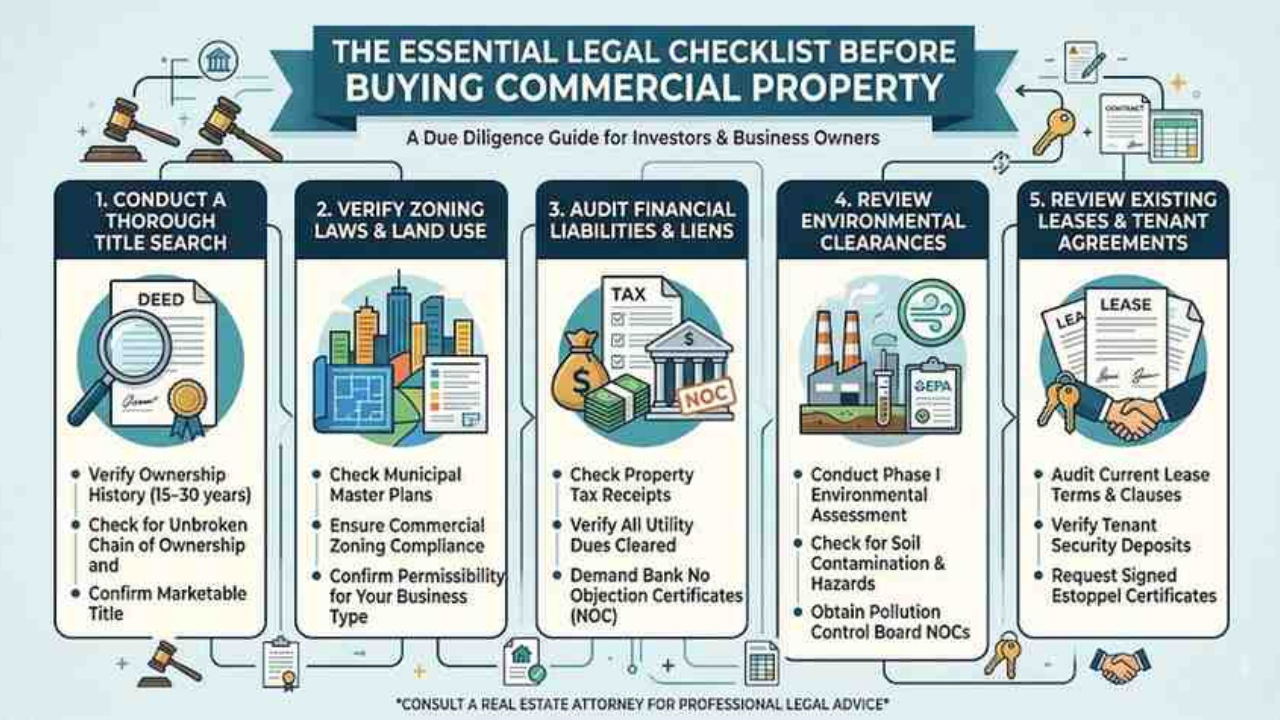
The Essential Legal Checklist Before Buying Commercial Property

Investing in commercial real estate is one of the most profitable financial moves you can make, but it also carries significant risk. Unlike residential real estate, commercial property transactions involve complex legalities, zoning laws, and massive financial commitments. Skipping proper legal due diligence can result in expensive lawsuits, voided contracts, or buying a property you cannot legally use for your business. To protect your investment, you need a bulletproof legal strategy. This essential legal checklist covers everything you must verify before closing the deal on a commercial property. Quick Reference: Commercial Property Legal Checklist Verification Category Key Documents to Check Why It Matters Title & Ownership Sale Deed, Mother Deed, Encumbrance Certificate Ensures the seller has the absolute legal right to sell the property. Zoning & Land Use Municipal Master Plan, Zoning Clearances Confirms your specific business type is legally allowed on the premises. Financial Liabilities Property Tax Receipts, Bank NOCs Protects you from assuming the previous owner’s debts and unpaid taxes. Environmental Laws EPA Clearances, Pollution Control Board NOC Prevents hefty fines for pre-existing environmental hazards on the land. Existing Leases Tenant Agreements, Estoppel Certificates Clarifies your legal obligations to current tenants occupying the building. 1. Conduct a Thorough Title Search The most critical step in buying commercial property is verifying the title. A clear and marketable title guarantees that the seller actually owns the property and has the legal authority to transfer ownership to you. Trace the Ownership History: Your real estate attorney should trace the property’s title back at least 15 to 30 years to ensure an unbroken chain of ownership. Verify the Mother Deed: This is the foundational document of the property. Ensure it is registered and readily available. Check for Joint Ownership: If the property has multiple owners, all parties must legally consent to the sale to prevent future disputes. 2. Verify Zoning Laws and Land Use Permissions Just because a property looks like a retail store doesn’t mean it is legally zoned for one. Zoning laws dictate exactly how a property can be used. Check Municipal Zoning Maps: Ensure the property is strictly zoned for commercial use, not residential or agricultural. Verify Specific Business Permissibility: If you plan to open a restaurant, factory, or medical facility, confirm that the local zoning ordinances allow that specific type of business. Look for Future City Planning Changes: Ensure there are no upcoming highway expansions or municipal projects that could result in eminent domain claims against your property. 3. Check for Encumbrances and Liens An encumbrance is a claim against the property by a party that is not the owner. Buying a property with an active lien means you are also buying the previous owner’s legal troubles. Obtain an Encumbrance Certificate: This legal document will reveal any registered mortgages, liens, or third-party claims against the property. Demand a Bank NOC: If the seller previously took a loan against the property, they must provide a No Objection Certificate (NOC) from the bank proving the debt is fully cleared. 4. Review Environmental Clearances Environmental compliance is a massive factor in commercial real estate. If the land is contaminated, the new owner is often held legally and financially responsible for the cleanup, regardless of who caused it. Conduct an Environmental Site Assessment (ESA): A Phase I ESA will identify any potential environmental hazards like soil contamination or hazardous waste. Check Local Pollution Control Rules: Manufacturing or industrial properties must have up-to-date clearances from local environmental and pollution control boards. 5. Audit Existing Commercial Leases If you are buying a commercial building that already has tenants, you inherit those lease agreements. You cannot arbitrarily kick tenants out or raise the rent without legal backing. Review All Lease Agreements: Check the duration, renewal clauses, and rent escalation terms for every existing tenant. Obtain Tenant Estoppel Certificates: This is a document signed by the tenant confirming the terms of their lease and stating that the landlord owes them no pending obligations. Check Security Deposits: Ensure the seller transfers all tenant security deposits to your accounts at closing. 6. Clear All Pending Taxes and Utility Dues Unpaid property taxes stay attached to the property, not the person. If the seller owes taxes, the government can seize the property even after you buy it. Verify Property Tax Receipts: Demand to see the most recent tax receipts to confirm there are no outstanding municipal dues. Check Utility Bills: Ensure electricity, water, and commercial maintenance bills are cleared up to the date of possession. Conclusion Buying commercial property is a high-stakes financial transaction. A single overlooked document can turn a lucrative investment into a legal nightmare. Always hire an experienced commercial real estate lawyer to perform comprehensive due diligence before signing a purchase agreement. By strictly following this checklist, you can confidently secure your commercial real estate investment. Disclaimer: This article is for informational purposes only and does not constitute professional legal or financial advice. Always consult with a qualified commercial real estate attorney in your local jurisdiction before making property investments.