
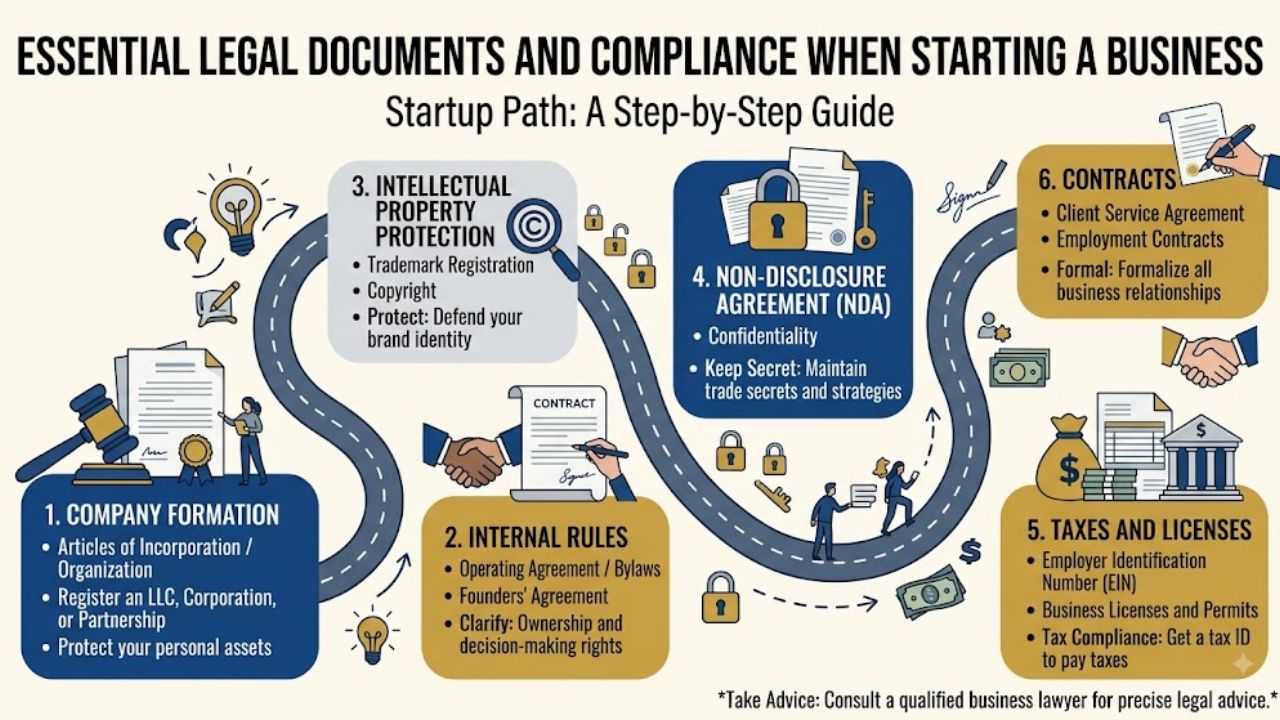
Launching a new business is an exciting venture, but a great idea is not enough to guarantee long-term success. Without a solid legal foundation, your startup is highly vulnerable to co-founder disputes, intellectual property theft, and expensive government fines.
Many new entrepreneurs make the critical mistake of treating legal compliance as an afterthought. However, setting up the right legal framework from day one protects your personal assets, builds trust with early investors, and ensures your operations are entirely legitimate. This comprehensive guide breaks down the essential legal documents and compliance steps required when starting a new business.
Quick Reference: Core Startup Legal Documents
Use this checklist to ensure your business covers all immediate legal bases before launching products or services to the public.
| Compliance Area | Essential Legal Document | Primary Purpose | High CPC Keywords |
| Business Formation | Articles of Incorporation / Organization | Legally creates your business entity (LLC or Corporation) with the state. | Company registration, LLC formation services |
| Internal Governance | Operating Agreement / Bylaws | Outlines ownership structures, voting rights, and profit distribution. | Startup legal documents, Corporate bylaws |
| Brand Protection | Trademark Registration | Protects your company name, logo, and slogans from competitors. | Intellectual property lawyer, Trademark registration |
| Confidentiality | Non-Disclosure Agreement (NDA) | Prevents employees and contractors from sharing your trade secrets. | Business lawyer, NDA drafting |
| Tax Compliance | Employer Identification Number (EIN) | A federal tax ID used for filing taxes, hiring employees, and opening bank accounts. | Apply for EIN, Business tax compliance |
1. Register Your Business Entity Correctly
Operating as a Sole Proprietorship is easy, but it exposes your personal assets (like your house and savings) to business liabilities. You must establish a separate legal entity.
-
Choose the Right Structure: Decide between a Limited Liability Company (LLC), an S-Corporation, or a C-Corporation based on your tax preferences and funding goals.
-
File Articles of Organization: Submit these foundational documents to your local government or state authorities to officially register your business name and entity type.
-
Appoint a Registered Agent: Most jurisdictions require you to designate a registered agent—a person or service authorized to receive official legal and tax correspondence on behalf of your business.
2. Draft an Operating Agreement or Founders’ Agreement
If you are starting a business with partners, a verbal agreement is a recipe for disaster. You need a legally binding contract that dictates how the business is run.
-
Define Equity and Ownership: Clearly document the percentage of the company each founder owns.
-
Outline Roles and Responsibilities: Specify who handles daily operations, financial decisions, and strategic planning.
-
Create an Exit Strategy: Include a “Buy-Sell” clause that dictates exactly what happens to a founder’s shares if they decide to leave the company, become incapacitated, or pass away.
3. Protect Your Intellectual Property (IP)
Your brand identity, proprietary software, and unique processes are often your most valuable assets. You must legally claim them before someone else does.
-
File for Trademarks: Protect your business name, logo, and main product names by registering them with the national patent and trademark office.
-
Sign Invention Assignment Agreements: Ensure that any code, designs, or products created by founders, employees, or contractors are legally owned by the company, not the individual creator.
4. Obtain Necessary Tax IDs, Licenses, and Permits
Compliance goes beyond just registering your business name; you must ensure you are legally allowed to operate in your specific industry and location.
-
Get an EIN: Apply for an Employer Identification Number (EIN) from the federal tax authority. This is essential for opening a business bank account and paying taxes.
-
Check Local Zoning Laws: Ensure your business address is zoned correctly for your type of operation, especially if you are opening a physical retail storefront or a manufacturing facility.
-
Apply for Industry-Specific Permits: Depending on your niche, you may need health department permits (for food services), professional licenses (for legal or financial consulting), or specialized sales tax permits.
5. Establish Ironclad Contracts for Employees and Clients
Handshake deals offer zero protection in a courtroom. Every business relationship must be defined by clear, written contracts.
-
Client Service Agreements: Draft standard Terms and Conditions (T&Cs) that outline your payment terms, scope of work, and liability limitations to protect against customer disputes.
-
Employment Contracts: Clearly define compensation, benefits, termination conditions, and expectations for all new hires.
-
Implement NDAs: Require contractors, vendors, and employees to sign Non-Disclosure Agreements before exposing them to your sensitive business data or client lists.
Conclusion
Setting up a business requires much more than just a catchy name and a website. Establishing the proper legal entity, drafting binding internal agreements, securing your intellectual property, and maintaining tax compliance are non-negotiable steps for long-term survival. Because a single legal mistake can bankrupt a startup, it is highly recommended to consult with a qualified business lawyer to draft your foundational documents and ensure absolute compliance in your jurisdiction.
Disclaimer: This article is for informational and educational purposes only and does not constitute professional legal advice. Laws and compliance requirements vary significantly by state, country, and industry. Always consult with a licensed business attorney for guidance specific to your startup.