
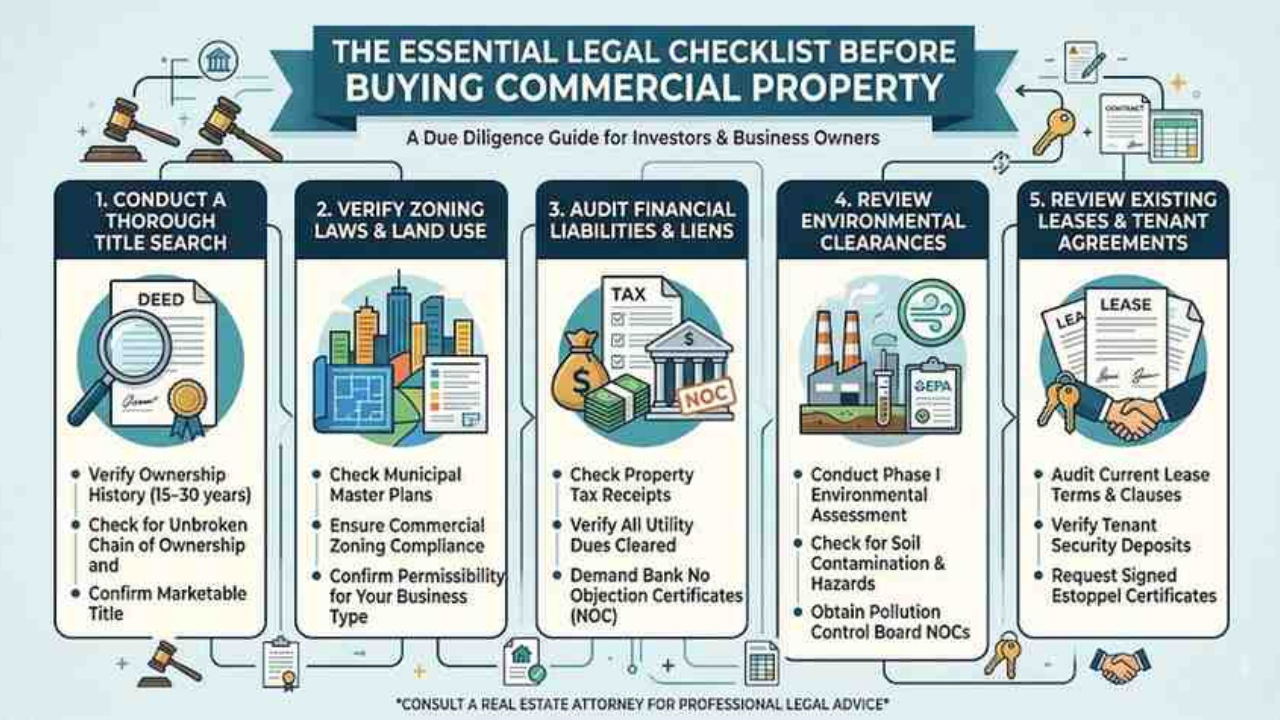
Investing in commercial real estate is one of the most profitable financial moves you can make, but it also carries significant risk. Unlike residential real estate, commercial property transactions involve complex legalities, zoning laws, and massive financial commitments.
Skipping proper legal due diligence can result in expensive lawsuits, voided contracts, or buying a property you cannot legally use for your business. To protect your investment, you need a bulletproof legal strategy. This essential legal checklist covers everything you must verify before closing the deal on a commercial property.
Quick Reference: Commercial Property Legal Checklist
| Verification Category | Key Documents to Check | Why It Matters |
| Title & Ownership | Sale Deed, Mother Deed, Encumbrance Certificate | Ensures the seller has the absolute legal right to sell the property. |
| Zoning & Land Use | Municipal Master Plan, Zoning Clearances | Confirms your specific business type is legally allowed on the premises. |
| Financial Liabilities | Property Tax Receipts, Bank NOCs | Protects you from assuming the previous owner’s debts and unpaid taxes. |
| Environmental Laws | EPA Clearances, Pollution Control Board NOC | Prevents hefty fines for pre-existing environmental hazards on the land. |
| Existing Leases | Tenant Agreements, Estoppel Certificates | Clarifies your legal obligations to current tenants occupying the building. |
1. Conduct a Thorough Title Search
The most critical step in buying commercial property is verifying the title. A clear and marketable title guarantees that the seller actually owns the property and has the legal authority to transfer ownership to you.
-
Trace the Ownership History: Your real estate attorney should trace the property’s title back at least 15 to 30 years to ensure an unbroken chain of ownership.
-
Verify the Mother Deed: This is the foundational document of the property. Ensure it is registered and readily available.
-
Check for Joint Ownership: If the property has multiple owners, all parties must legally consent to the sale to prevent future disputes.
2. Verify Zoning Laws and Land Use Permissions
Just because a property looks like a retail store doesn’t mean it is legally zoned for one. Zoning laws dictate exactly how a property can be used.
-
Check Municipal Zoning Maps: Ensure the property is strictly zoned for commercial use, not residential or agricultural.
-
Verify Specific Business Permissibility: If you plan to open a restaurant, factory, or medical facility, confirm that the local zoning ordinances allow that specific type of business.
-
Look for Future City Planning Changes: Ensure there are no upcoming highway expansions or municipal projects that could result in eminent domain claims against your property.
3. Check for Encumbrances and Liens
An encumbrance is a claim against the property by a party that is not the owner. Buying a property with an active lien means you are also buying the previous owner’s legal troubles.
-
Obtain an Encumbrance Certificate: This legal document will reveal any registered mortgages, liens, or third-party claims against the property.
-
Demand a Bank NOC: If the seller previously took a loan against the property, they must provide a No Objection Certificate (NOC) from the bank proving the debt is fully cleared.
4. Review Environmental Clearances
Environmental compliance is a massive factor in commercial real estate. If the land is contaminated, the new owner is often held legally and financially responsible for the cleanup, regardless of who caused it.
-
Conduct an Environmental Site Assessment (ESA): A Phase I ESA will identify any potential environmental hazards like soil contamination or hazardous waste.
-
Check Local Pollution Control Rules: Manufacturing or industrial properties must have up-to-date clearances from local environmental and pollution control boards.
5. Audit Existing Commercial Leases
If you are buying a commercial building that already has tenants, you inherit those lease agreements. You cannot arbitrarily kick tenants out or raise the rent without legal backing.
-
Review All Lease Agreements: Check the duration, renewal clauses, and rent escalation terms for every existing tenant.
-
Obtain Tenant Estoppel Certificates: This is a document signed by the tenant confirming the terms of their lease and stating that the landlord owes them no pending obligations.
-
Check Security Deposits: Ensure the seller transfers all tenant security deposits to your accounts at closing.
6. Clear All Pending Taxes and Utility Dues
Unpaid property taxes stay attached to the property, not the person. If the seller owes taxes, the government can seize the property even after you buy it.
-
Verify Property Tax Receipts: Demand to see the most recent tax receipts to confirm there are no outstanding municipal dues.
-
Check Utility Bills: Ensure electricity, water, and commercial maintenance bills are cleared up to the date of possession.
Conclusion
Buying commercial property is a high-stakes financial transaction. A single overlooked document can turn a lucrative investment into a legal nightmare. Always hire an experienced commercial real estate lawyer to perform comprehensive due diligence before signing a purchase agreement. By strictly following this checklist, you can confidently secure your commercial real estate investment.
Disclaimer: This article is for informational purposes only and does not constitute professional legal or financial advice. Always consult with a qualified commercial real estate attorney in your local jurisdiction before making property investments.